
At West Cancer Center & Research Institute, we offer the widest range of radiation therapies in the Mid-South. With over half of our cancer patients receiving radiation, you can trust our radiation oncologist to provide treatments that not only shrink tumors but spare healthy surrounding tissue.
Our Radiation Oncology Department is 1 of 9 centers in Tennessee to have achieved APEx accreditation, an acknowledgment from the American Society of Radiation Oncology (ASTRO) for providing the highest quality patient care and meeting rigorous standards of excellence.
Patients can receive state-of-the art radiation therapies at 5 locations: Germantown, TN Campus; Corinth, MS Campus in partnership with Magnolia Regional Hospital; Dyersburg, TN Campus; Paris, TN Campus in partnership with Henry County Medical Center; Florence, AL in partnership with North Alabama Cancer Center.
What is Radiation Therapy?
Radiation therapy is a cancer treatment that uses high-energy beams to destroy cancer cells or stop them from growing. Think of it like a focused beam of energy aimed at the tumor. It damages the cancer cells’ DNA so they cannot keep multiplying. Over time, your body clears away these damaged cells. Doctors use special machines to target the cancer while protecting nearby healthy tissue.
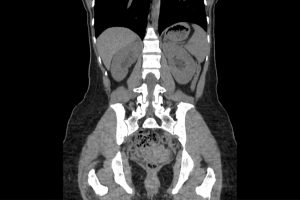
GYN High-Dose Brachytherapy
HOW IT WORKS: Places a tiny radioactive source inside the uterus or vagina to treat cancer.
WHAT IT IS USED FOR: Cervical and endometrial cancers.
WHAT TO EXPECT: Short outpatient sessions after applicator placement under anesthesia.
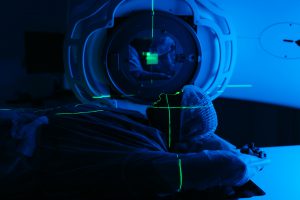
Image Guided Radiation Therapy (IGRT)
HOW IT WORKS: External radiation with imaging before/during treatment for accuracy
WHAT IT IS USED FOR: Tumors that move (lung, prostate) or near critical organs
WHAT TO EXPECT: Quick, painless sessions; imaging each time; mild fatigue/skin irritation possible
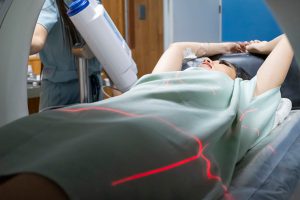
Intensity Modulated Radiation Therapy (IMRT)
HOW IT WORKS: A machine shapes radiation beams to match your tumor.
WHAT IT IS USED FOR: Many cancers (prostate, breast, lung, brain).
WHAT TO EXPECT: Painless sessions, 10–30 minutes, usually 5 days a week for several weeks.
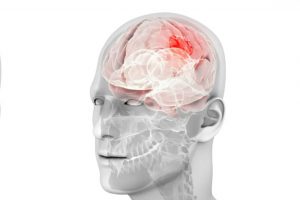
Optune
HOW IT WORKS: A wearable device that sends gentle electrical fields to the brain.
WHAT IT IS USED FOR: Glioblastoma (GBM).
WHAT TO EXPECT: Wear it most of the day; mild scalp irritation is common
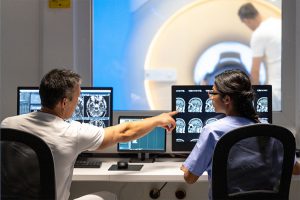
MRI Guided Volume Based Outpatient Brachytherapy
HOW IT WORKS: Internal radiation using MRI for precise tumor targeting.
WHAT IT IS USED FOR: Cervical cancer and pelvic tumors.
WHAT TO EXPECT: Outpatient; applicators placed under anesthesia; MRI before each dose; mild discomfort.
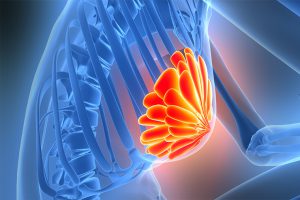
Partial Breast High-Dose Brachytherapy
HOW IT WORKS: High-dose internal radiation near lumpectomy site.
WHAT IT IS USED FOR: Early-stage breast cancer post-lumpectomy.
WHAT TO EXPECT: Balloon/catheter placed; 2 treatments/day for 5 days; mild soreness/redness
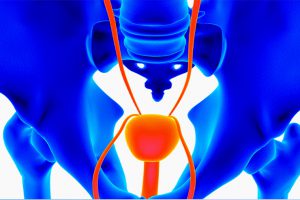
Prostate Fiducial Placement
HOW IT WORKS: Small markers placed in prostate for precise radiation.
WHAT IT IS USED FOR: Prostate cancer radiation planning.
WHAT TO EXPECT: 15-min outpatient; local anesthesia; mild bleeding or soreness.
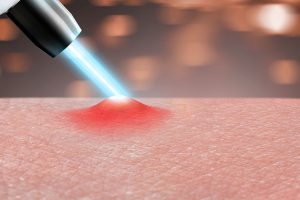
Skin Brachytherapy
HOW IT WORKS: Radiation applied directly to skin tumor.
WHAT IT IS USED FOR: Non-melanoma skin cancers.
WHAT TO EXPECT: Short outpatient sessions; minimal scarring; mild irritation
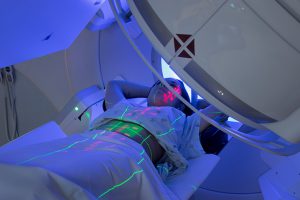
Stereotactic Body Radiation Therapy (SBRT)
HOW IT WORKS: High-dose, pinpoint external radiation in few sessions
WHAT IT IS USED FOR: Small tumors (lung, liver, spine, prostate)
WHAT TO EXPECT: 1–5 sessions; custom immobilization; mild fatigue possible
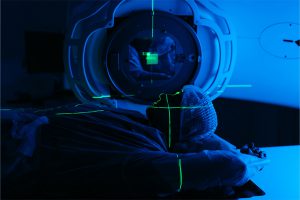
Stereotactic Radiosurgery (SRS)
HOW IT WORKS: Precise, high-dose radiation for brain/spinal lesions.
WHAT IT IS USED FOR: Brain tumors, AVMs, trigeminal neuralgia.
WHAT TO EXPECT: 1–5 sessions; head frame or mask; mild headache/fatigue
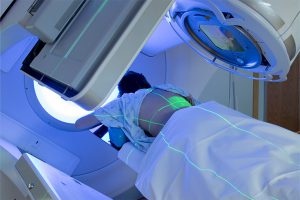
Stereotactic Spine Radiotherapy
HOW IT WORKS: Targeted radiation for spinal tumors
WHAT IT IS USED FOR: Spine metastases or primary tumors
WHAT TO EXPECT: 1–5 sessions; pain relief common; mild soreness
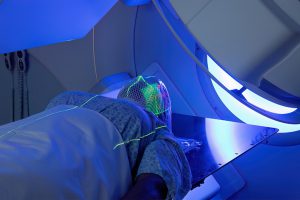
3D Conformal Radiation Therapy
HOW IT WORKS: External radiation shaped to tumor using imaging.
WHAT IT IS USED FOR: Breast, prostate, lung, head/neck cancers
WHAT TO EXPECT: Daily sessions for weeks; mild fatigue/skin changes
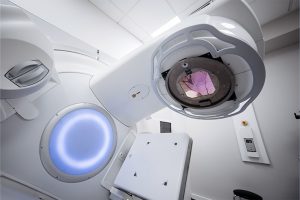
Volumetric Modulated Arc Therapy (VMAT)
HOW IT WORKS: Advanced IMRT delivering radiation in a continuous arc.
WHAT IT IS USED FOR: Complex tumors near critical organs
WHAT TO EXPECT: 2–5 min sessions; daily for weeks; similar side effects to IMRT
Our Providers:




Radiation Oncology Research Programs
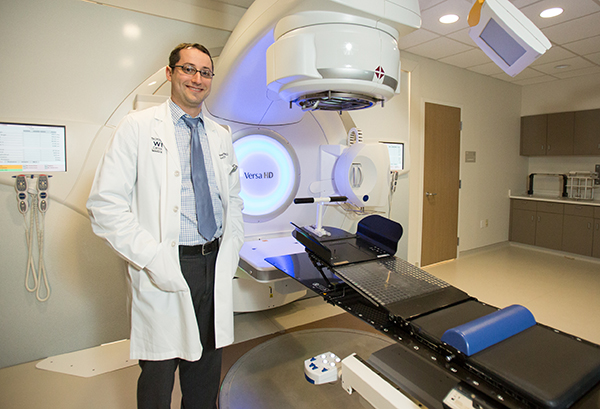
West Cancer Center’s Older Adult Radiation Oncology Research Program and Clinic is dedicated to improving care for our senior adult patients through three key initiatives:
-
Geriatric Screening Assessments
-
Personalized Counseling on Treatment Options
-
Clinical Research Focused on Older Adults
Ask your provider if you’re interested in learning more about this program.